Launching4 min read
Drawing a character like Max Cat
How to design a hand-drawn character that's easy to redraw, full of expression and ready to split into layers for a KURV collection, using Max Cat's seven-layer build as a reference point.
KURV teamAlso in Español, Português (Brasil)
On this page13 sections
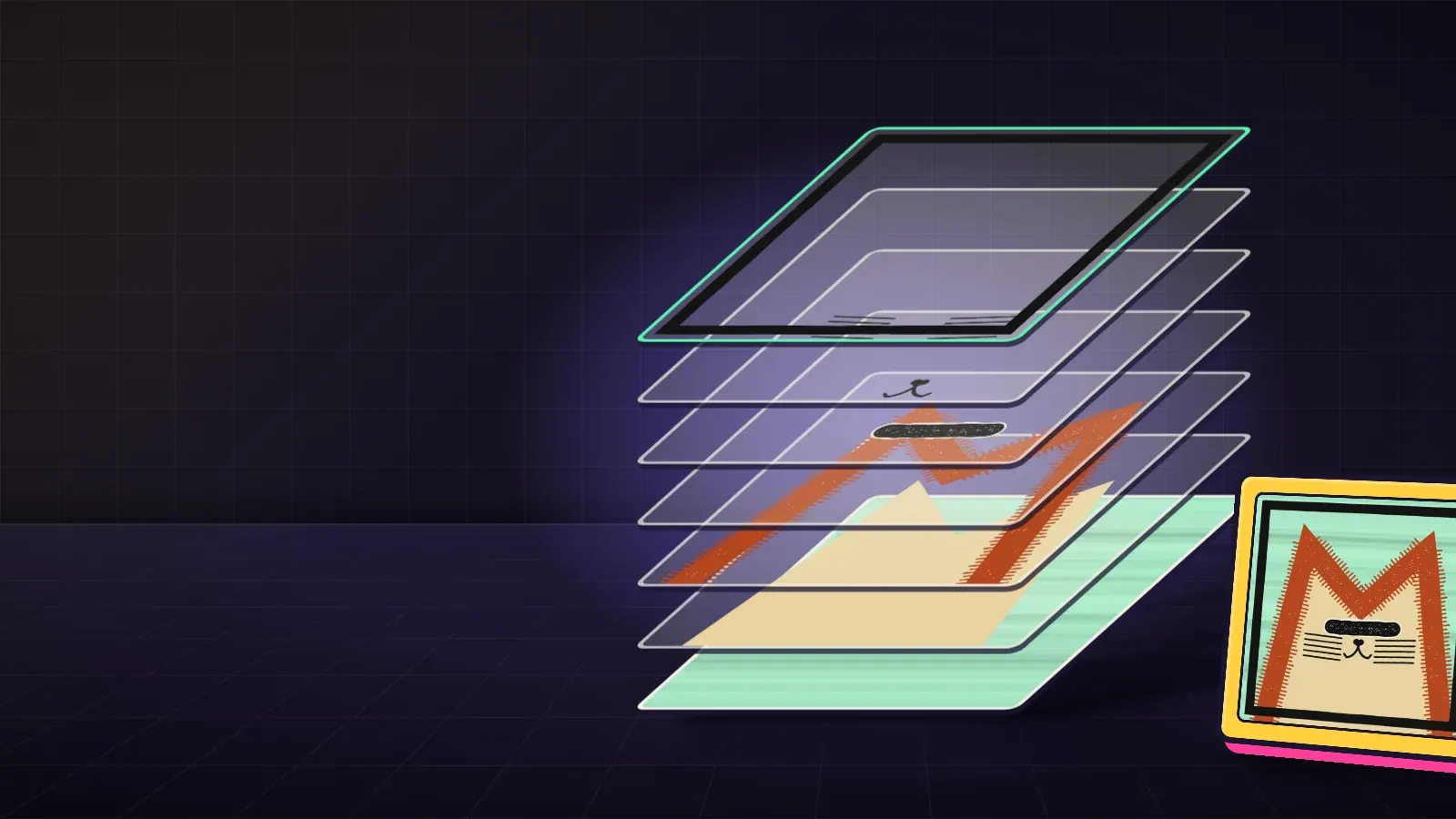
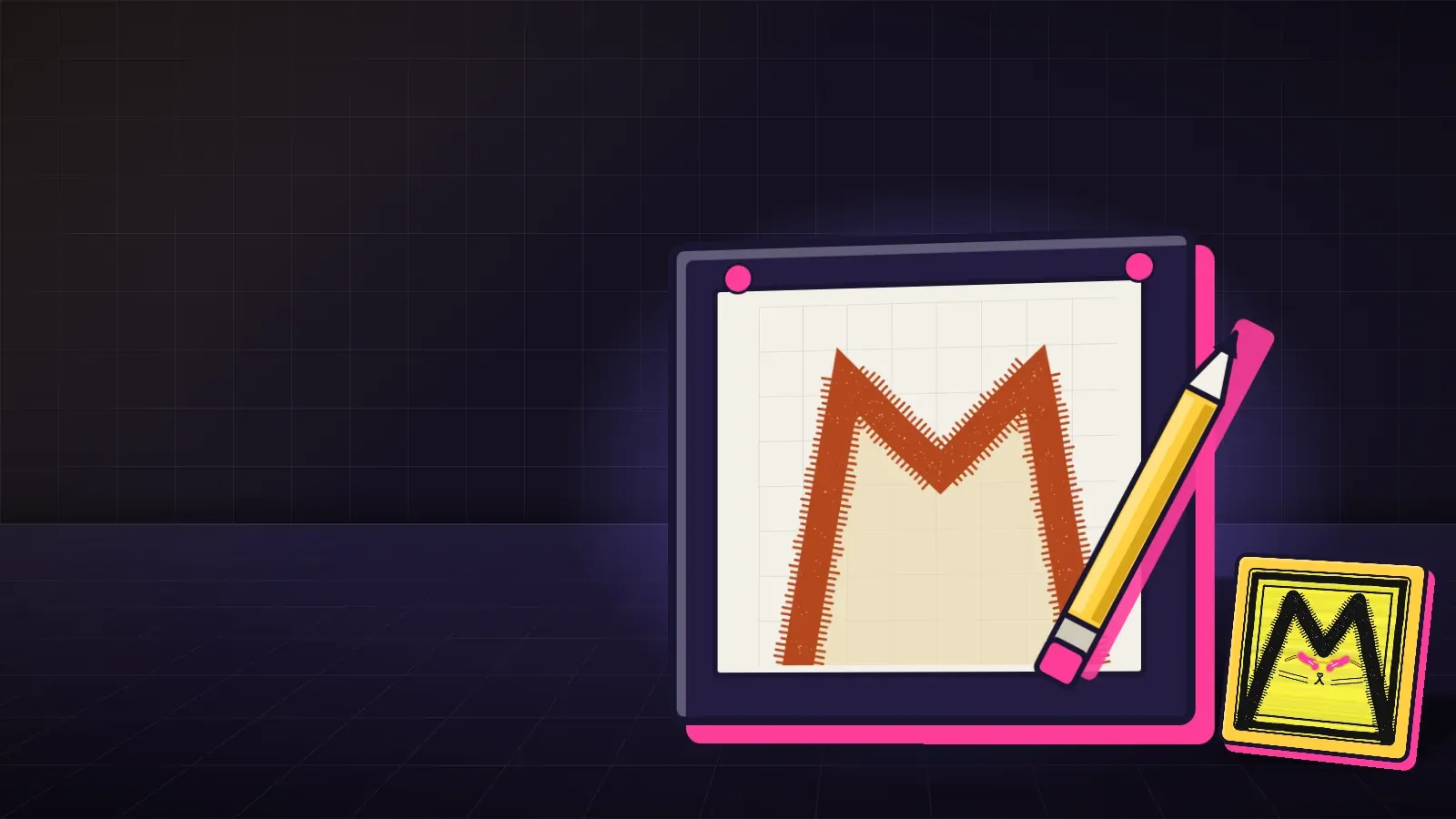
Max Cat, Charvel’s first KURV collection and KURV’s mascot, is hand-drawn and built from seven layers. You shouldn’t copy him, but you can learn from how a character like him is put together. Here’s how to design your own character that’s easy to redraw, full of personality and ready to become a collection.
Start with simple shapes
Great characters start as a few simple shapes: a circle head, a bean body, triangle ears. Simple shapes are easy to redraw the same way every time, which matters when you’ll be drawing dozens of traits that must line up.
- Sketch ten quick shape combinations in a minute each.
- Pick the one that reads instantly, even as a tiny thumbnail.
- Fill it in, keeping the shapes visible underneath.
The silhouette test
Fill your character in solid black. Can you still tell what it is and what mood it’s in? A strong silhouette makes a character recognizable on Explore at thumbnail size. Ears, tails and posture do most of this work.
Expression
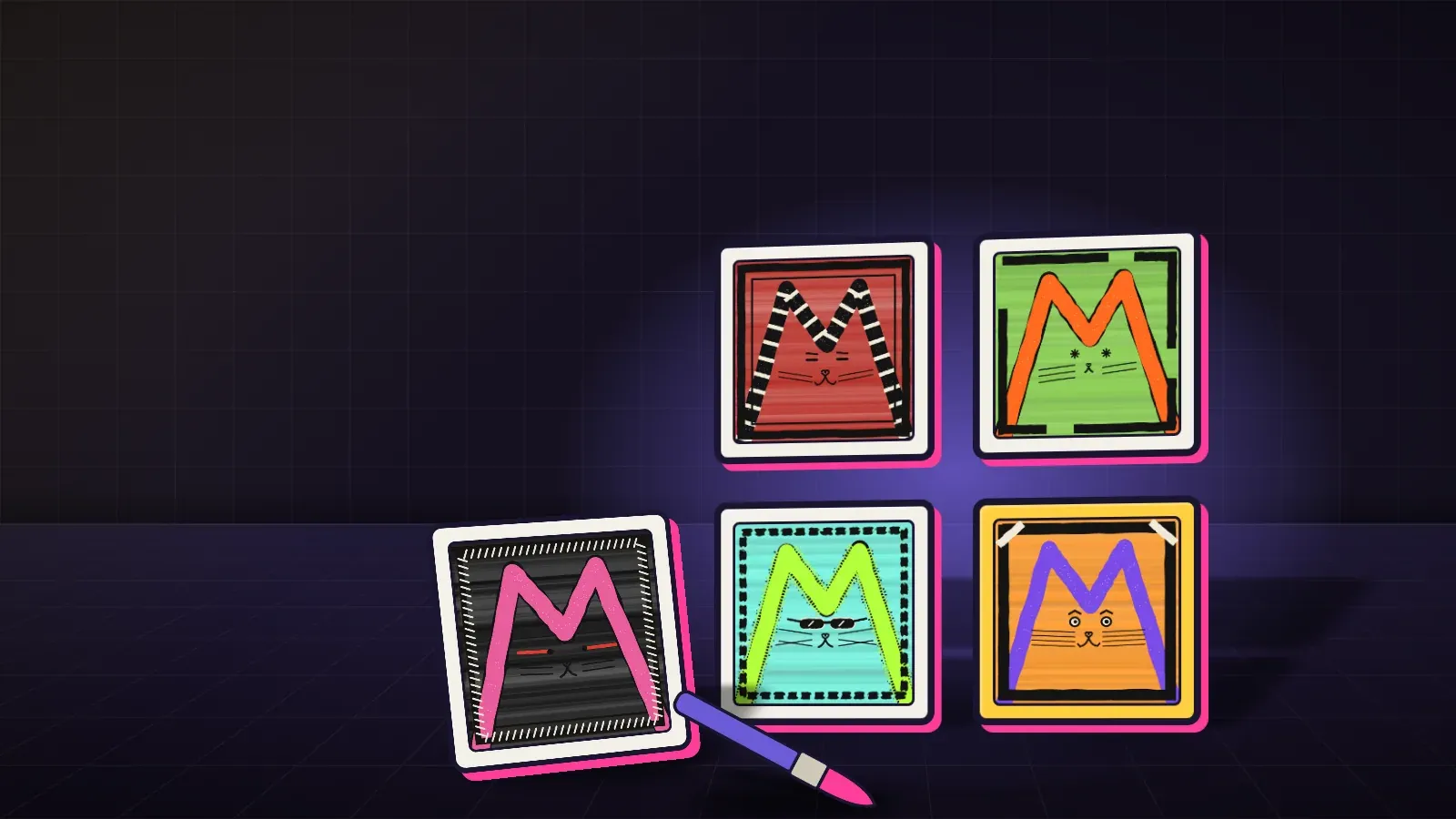
Eyes and eyebrows do most of the acting. Practice a set of moods on the same face:
- Happy, grumpy, sleepy, surprised, suspicious, smug.
Keep everything else the same and change only the eyes and mouth. If each mood reads clearly, your character has range. In a layered collection, those moods often become an Eyes layer, which is exactly where Max Cat keeps much of his attitude.
Consistency: a reference sheet
Before drawing traits, make a reference sheet:
- Front view, the main pose.
- Side and back, even if you won’t use them in the collection.
- Colors, with exact swatches.
- Proportions: head size relative to body, eye spacing.
Every trait you draw later should match the sheet.
From character to layers
To turn a character into a layered collection, split it into parts that can change independently. Max Cat uses seven, back to front: Background, Fur, Head, Eyes, Nose, Whiskers, Frame. Your character might need fewer or different ones.
Steps:
- List the parts that could vary: background, body color, eyes, accessories.
- Order them back to front.
- Draw one full piece, then separate it into those layers on the same canvas.
- Draw a second trait for each layer and test every swap.
- Build in Studio to see combinations.
Traits, layers and rarity 101 and Preparing your art files cover the technical side.
Poses and life
For a layered collection you’ll usually keep one pose so traits line up. But draw your character doing lots of things anyway: eating, sleeping, falling over. Those drawings feed your posts, your story and your sense of who the character is.
A worked example
Ana wants a grumpy frog. Her first sketches all look like generic frogs. She tries shapes: a flat, wide head with heavy-lidded eyes reads as grumpy even in silhouette. She draws six moods by changing only the eyelids and mouth, then a reference sheet. For the collection, she splits it into five layers: Background, Skin, Eyes, Mouth, Hat. The first test build in Studio shows the hats sit wrong on two eye traits, so she adjusts the hats, rebuilds, and every frog looks right.
Personality before polish
Before refining lines, decide who your character is. Write three words: “grumpy, loyal, hungry”. Then check every drawing against them. Does this pose look grumpy? Does this trait fit someone loyal and hungry? Three words give you a filter for every choice, from colors to hats to the name of each trait. Characters feel alive when every detail agrees with who they are.
Color that carries identity
Pick one main color your character will be known by, plus a few supporting ones. Keep the main color steady across most traits, so the collection reads as one character even as traits change. Test your palette against every background you plan: if the character disappears on one, darken or lighten that background rather than changing the character.
Keeping a character fresh after launch
A mascot lives on after mint. Keep drawing it: small comics, seasonal sketches, reactions to things your community says. Each new drawing reminds holders why they liked it, and gives you something real to share besides price talk.
Common mistakes
- Too much detail that disappears at thumbnail size.
- No reference sheet, so traits drift.
- Copying Max Cat or another mascot instead of designing your own.
- Weak silhouette.
- Splitting into too many layers before the base character is solid.
FAQ
Do I need to be a great artist? No. Simple, consistent and expressive beats detailed.
Can I use Max Cat as a base? No. He belongs to Charvel. Design your own character.
How many layers should my character have? As many as you need. Max Cat uses seven.
Should I draw by hand or digitally? Either. Max Cat is hand-drawn; what matters is consistency.