Getting started3 min read
Base and Solana basics: what "choose your chain" means
What a blockchain network is, why every action has a small network fee, how KURV covers it, and why your wallet has to match the collection's chain.
KURV teamAlso in Español, Português (Brasil)
On this page7 sections
You’ll see the words “Base” and “Solana” around KURV. Here’s what a chain actually is, why it matters which one a collection lives on, and why you don’t need to stress about fees.
What a chain is
A blockchain network (people just say “chain”) is a public record that lots of computers keep in sync. When you mint, buy or sell a piece, that action gets written to the chain, and anyone can look it up.
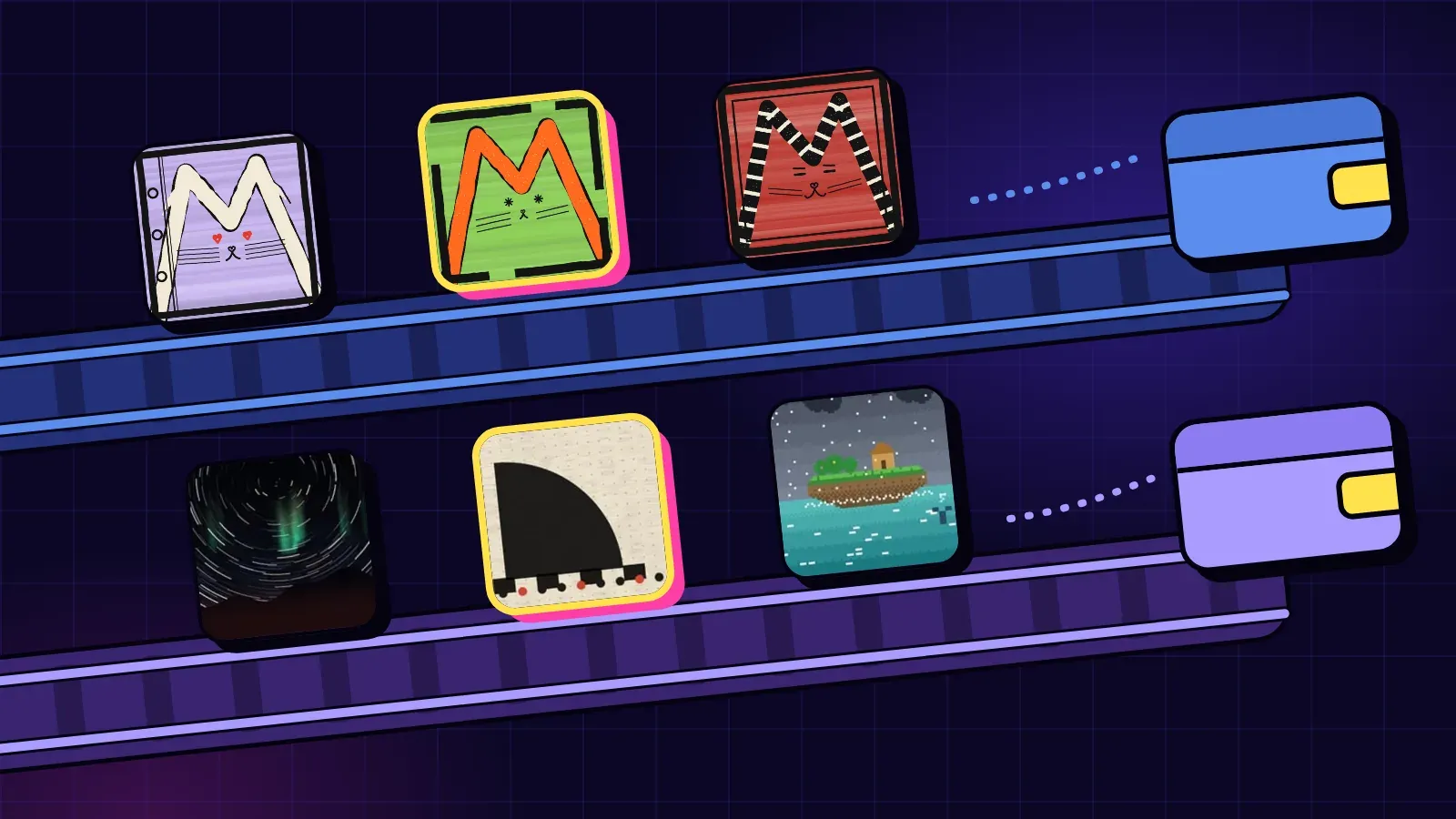
Different chains are different records. They don’t share one list. A piece that lives on one chain stays on that chain.
Where KURV is
KURV runs on testnet today, on Base Sepolia and Solana Devnet: test copies of Base and Solana where coins are free and nothing has value. Base is an Ethereum layer 2 built by Coinbase, which in plain words means a network on top of Ethereum where transactions are quick and cheap.
So today, a creator picks Base or Solana when they launch a collection. That choice is permanent for the collection: a piece always stays on the network its collection lives on.
Why there’s a network fee
Every action written to a chain costs a small network fee. It pays the network for recording your action. It isn’t a KURV fee, and KURV gets none of it.
On most crypto apps you’d need to hold a separate coin just to pay that fee. On Base that’s usually ETH. That’s where a lot of beginners get stuck: they have the money for the piece but not the right coin for the fee.
How KURV handles it: the paymaster
On KURV, you don’t need ETH. On testnet, KURV covers the network fee on Base through a Coinbase service called a paymaster, so the mint page says Network fee covered. One confirm, and nothing extra leaves your wallet.
On Base these fees are usually a few cents, but they move with how busy the network is, so there’s no fixed number. On Solana, the network fee is paid in SOL, from your wallet. Two habits help there:
- Keep a little spare SOL so you can always cover the fee
- If you’re short, KURV tells you how much to add and sends nothing
What’s USDC doing on Base?
USDC is a dollar-pegged stablecoin made by Circle, and it runs on Base. On Base, most KURV prices are in USDC. More on that in What is USDC, and why are KURV prices in it?
Your wallet has to match the chain
This is the “choose your chain” part that matters for collectors. Your wallet is your account on a specific network. To hold a piece, your wallet has to be on the same chain as the collection.
Your KURV wallet is your account on Base, and it’s made for you when you log in. The same login links a Solana wallet too, so you’re set for everything on KURV today. Still, it’s a good habit to glance at the network on a collection’s mint page before you mint. It’s listed right there. (How the wallet works: What is a crypto wallet?.)
Quick recap
- A chain is a public record, and pieces stay on their collection’s chain
- KURV runs on testnet today, on Base and Solana
- Every action has a small network fee, and KURV gets none of it
- On testnet, KURV covers the fee on Base via a Coinbase paymaster, so no ETH needed; on Solana it’s paid in SOL
- Your wallet must match the collection’s chain
Next: How to mint an NFT on KURV.